High-purity Karstedt's
catalyst & curing systems
Direct factory supply for addition-cure silicone formulation teams. 1,000–20,000 PPM custom concentration, inhibitor matching, COA for every batch — engineered for PPF, release liners, optical coatings and precision LSR.
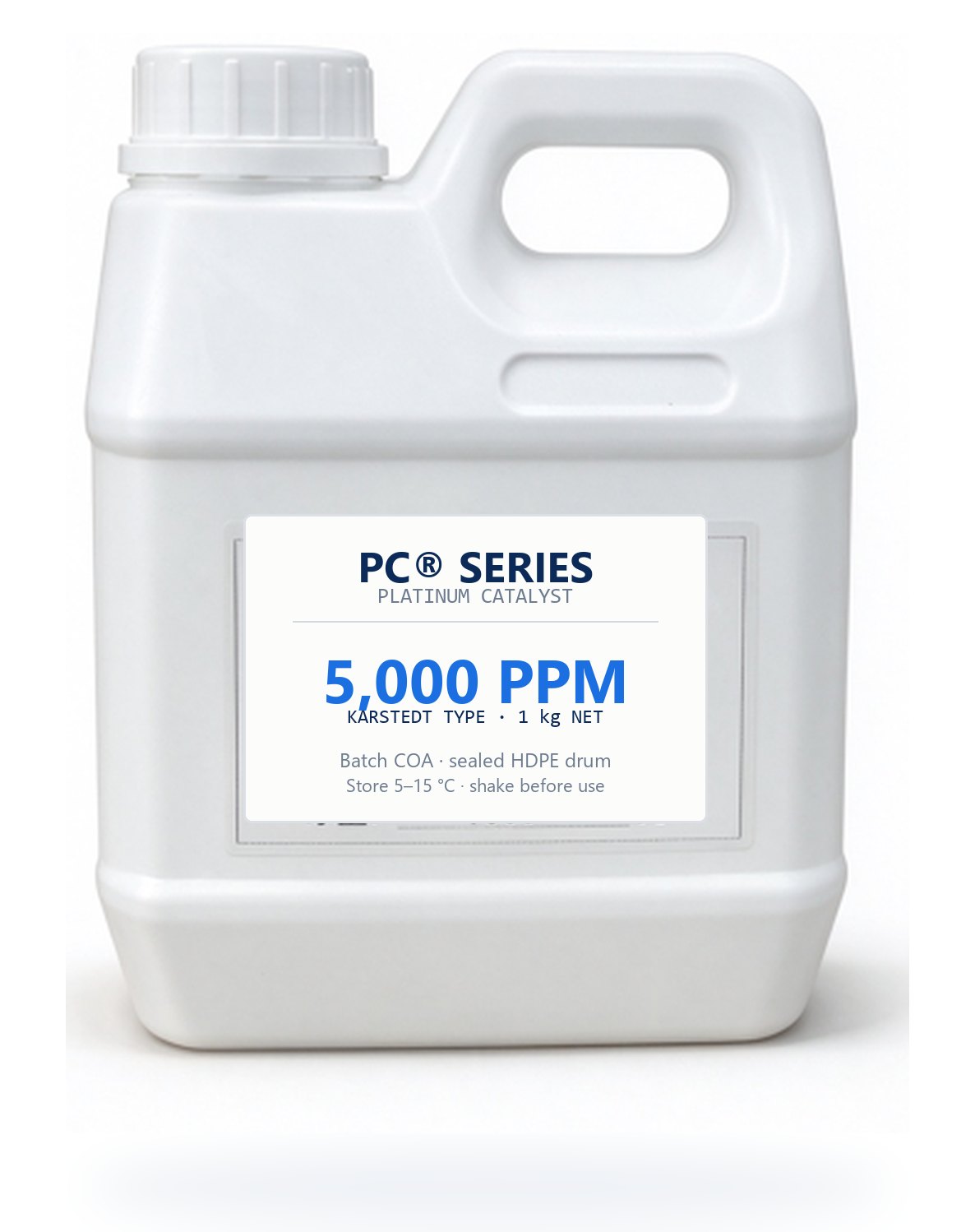
Real catalyst, real packaging.
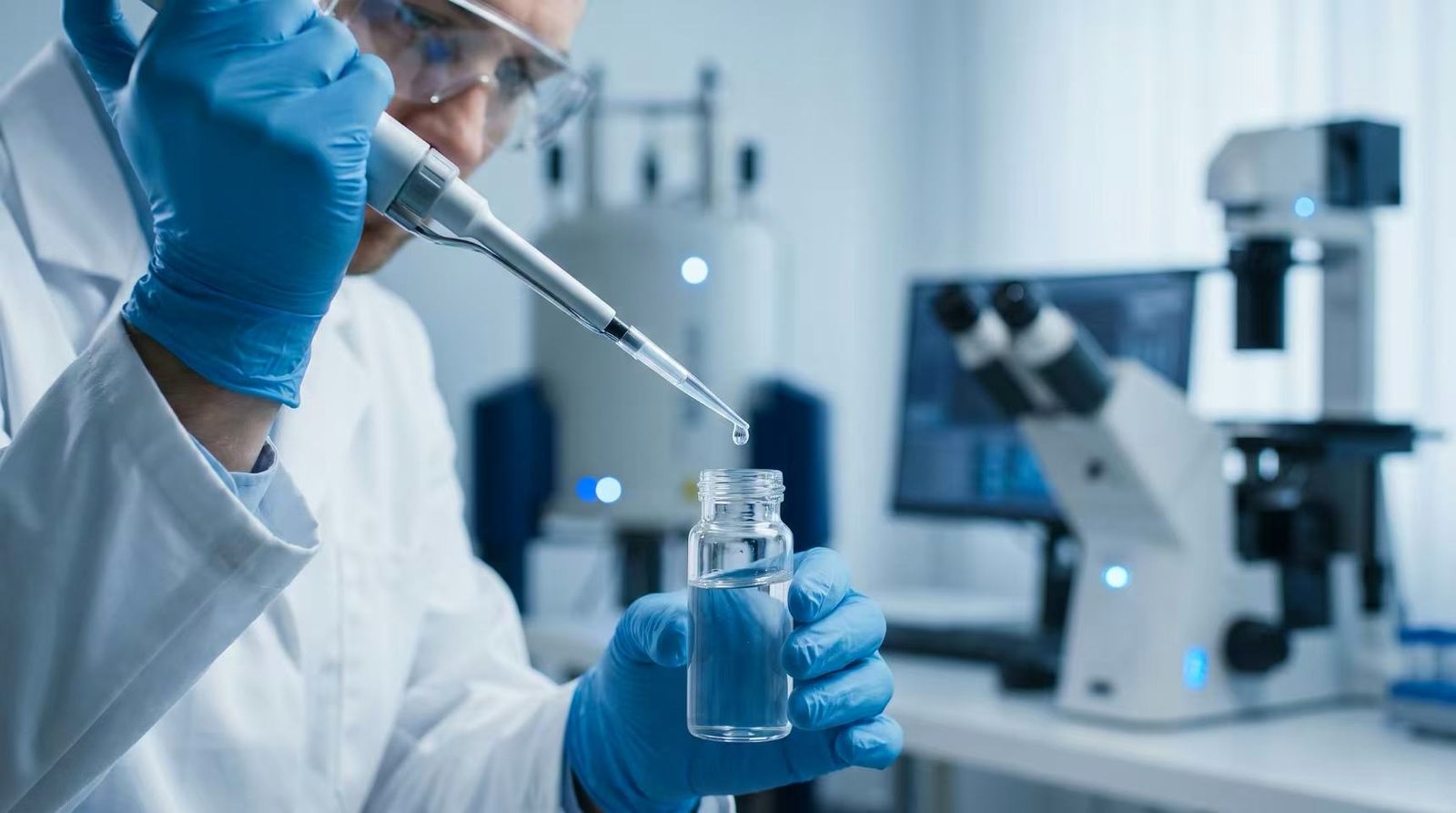
The drum a formulator receives is the drum that was filled: sealed HDPE, labelled by grade and batch, with a COA for the lot. Application work happens on the same bench where the samples are prepared.
Built for formulators who need predictable curing.
Technical buyers do not need a longer brochure — they need concentration, kinetics and compatibility they can verify. Every page here is organised around specifications, test conditions and a direct sample path.
Factory-direct supply
Synthesis to finished catalyst under one roof. Pricing tracks the platinum market, without trading-company markup.
Optical clarity
Low-yellowing, low-fogging systems for PPF top coats, optical films and clear silicone parts.
Active tuning
1,000–20,000 PPM concentration and inhibitor matching against your cure speed, bath life and line speed.
Global compliance
VOC-free, RoHS and REACH aligned, with COA, TDS and SDS documentation for every shipment.
Six families, one curing system.
Five catalyst series and the inhibitor system that controls pot life. Start from the problem you are solving, not from a model number.
Standard Karstedt's Catalysts
Six concentration grades covering mainstream addition-cure silicone.
High-Activity & Anti-Poisoning Catalysts
Upgraded activity and substrate resilience for demanding lines.
Thermal Stability & Anti-Yellowing Catalysts
ΔE 0.8 versus 4.2 after 85°C / 48 h accelerated aging.
Advanced Anti-Poisoning Catalysts
Curing stability where sulfur, phosphorus and nitrogen are present.
Optical Grade High-Refractive-Index Catalysts
RI above 1.50 with complete solubility and zero turbidity.
Precision silicone inhibitors
Seven inhibitors that set curing time without slowing the hot cure. Dose with any PC catalyst for a complete addition-cure package.
Where the range goes beyond a standard catalyst.
Three grades carry most of the technical differentiation: anti-yellowing, anti-poisoning and high-refractive-index chemistry.
Anti-yellowing benchmark
After 85°C / 48 h accelerated aging, PC-42 measures ΔE 0.8 against 4.2 for a conventional Karstedt's catalyst.
Anti-poisoning chemistry
PC-18B holds cure activity with sulfur, phosphorus and nitrogen traces. PC-18A extends that to high-concentration contamination — evaluation samples available.
Optical grade GZ-5
Fully soluble in high-refractive phenyl systems: zero turbidity, zero precipitation, 99.82% transmittance in Mini LED encapsulation.
Start from the production problem.
Five industries where cure chemistry decides yield: yellowing in PPF, migration in release liners, haze in optical encapsulation, sterilisation colour in medical LSR, poisoning in potting and power insulation.
PPF & Coatings
Zero yellowing under engine heat and solar UV.
Release Liners
Instant cure at several hundred metres per minute.
Optical & Electronics
Refractive index above 1.50, zero haze.
LSR Medical/Food
Addition cure with no by-products.
Encapsulation
Stable cure where the chemistry fights back.
Trust that can be measured, not claimed.
Catalyst trust comes from testing capability: platinum concentration, trace impurities, curing speed and formulation-window simulation. These are the four checks behind every certificate of analysis we issue.
The instruments behind batch-to-batch stability.
Three checks decide whether a catalyst lot behaves like the last one: how much platinum it contains, what else is in it, and how it cures in your formulation window.
ICP-OES analysis
Platinum content verified at PPM level, so the active concentration on the label is the concentration in the drum.
GC-MS purity testing
Screens the trace impurities that cause yellowing, catalyst poisoning and batch-to-batch drift.
Curing and rheology simulation
Measures cross-linking speed, bath life and line-speed compatibility against your process window.
Every batch keeps a retain sample.
Reference samples are stored under the same 5–15°C sealed conditions as the shipped material, so a claim three shipments later can be checked against the actual lot.
COA, TDS and SDS ship with the material.
Each drum carries a batch number linked to its COA. TDS and SDS are issued per grade; compliance statements are provided on request during quotation.
Three steps procurement can actually follow.
Custom concentration is not a special project — it follows a fixed path from formulation data to commercial delivery.
Formula matching
Collect application, substrate, cure temperature, line speed and target bath life. Recommend grade and PPM.
Lab validation
Adjust PPM activity and inhibitor package, then run a small-batch cure and colour test against the specification.
Stable delivery
Samples with COA, TDS and SDS, then sealed production packaging and lot-controlled supply.
Scale and review
Batch consistency checks and a technical review at each scale-up step — 1 kg, 25 kg, full drum.
Production pain points, not company news.
Each case connects a catalyst choice to a measurable production outcome, with the test conditions stated.
Battery pack seal: VOC compliance without losing compression set
A battery pack seal was built on a peroxide cure system. VOC emissions failed the customer's incoming specification, and the alternative addition-cure trial produced uneven cell structure and compression set above the 10% limit.
Medical LSR diaphragm: 100 steam cycles without yellowing
A respiratory valve diaphragm had to survive repeated 121°C wet-heat sterilisation without visible colour change. With the incumbent catalyst, yield after sterilisation was 82% and rejected parts were discoloured.
Mini LED encapsulation: 99.82% transmittance at 95% yield
A high-refractive-index encapsulation compound clouded when the catalyst was added, and the resulting light scattering failed the transmittance target. Yield was limited by optical rejects rather than by the dispenser.
VOC-free chemistry, documented.
Addition-cure platinum systems release no by-products. We state compliance as “compliant with RoHS and REACH” — no certificate numbers, no claims we cannot document.
- RoHS and REACH statements available on request
- VOC-free formulation, no peroxide by-products
- TDS and SDS per grade, COA per batch
- Medical case studies describe the end device, not product certification
What you receive with a quotation
- Technical data sheet for the recommended grade
- Safety data sheet in the requested language
- Sample COA with the lot number
- RoHS / REACH compliance statement
- Packaging and shelf-life specification
Curing time is a setting, not a guess.
Seven inhibitors set pot life from minutes to a week without slowing the hot cure.
Medium-to-high temperature
The default inhibitor for medium-to-high temperature cure systems. Buys bench and line time without slowing the cure once the part reaches temperature.
Medium-to-high temperature
For plants that need a full week of pot life and still want the same hot cure. Same dosage window as PC-611, longer open time.
Ambient / low temperature
For ambient-cure systems and heat-sensitive substrates. Lets the compound cure in minutes to hours at room temperature without an oven.
Match a grade to your formulation.
Send your cure temperature, line speed, substrate and target bath life. We reply with a recommended grade, PPM and inhibitor dosage within 24 hours.